
Beginner’s Guided Meditation: 10-Minute Daily Practice
You wake up, check your emails, rush to get dressed, and grab coffee on the go. By lunch, you’re either skipping meals or reaching for something quick (and not so healthy). Sound familiar?
Introduction: The Reality of the Busy Professional
You wake up, check your emails, rush to get dressed, and grab coffee on the go. By lunch, you’re either skipping meals or reaching for something quick (and not so healthy).
Sound familiar?
For many professionals, maintaining a balanced diet feels like an impossible task amidst deadlines, meetings, and life’s constant rush. But here’s the truth: healthy eating doesn’t have to be time-consuming or expensive; it just requires a plan.
This is where meal prepping becomes your best ally. With a single hour of focused prep, you can set yourself up for a week of energy, focus, and better food choices.
Why Meal Prep Matters More Than Ever
Meal prep isn’t just a trend; it’s a strategy backed by science and productivity experts. Studies show that individuals who plan and prepare meals ahead of time are more likely to maintain a healthy weight, eat more nutrient-rich foods, and save money compared to those who don’t.
For busy professionals, the benefits go beyond nutrition:
- Saves Time: No more debating what to eat daily.
- Saves Money: Reduces impulse food purchases and takeouts.
- Boosts Energy: Nutrient-rich meals mean sustained productivity and fewer crashes.
- Improves Focus: The right foods keep your brain sharp for those long workdays.
Think of meal prep as your weekly investment in performance and well-being.
Step 1: Plan Your Week (Before You Shop)
Start with clarity. Before you even touch a frying pan, take 10 minutes to plan your meals for the week.
Here’s a quick method:
- Pick your meals: Choose 2–3 main dishes you can rotate (for variety and balance).
- Think in categories:
- Breakfast (quick, energizing options)
- Lunch (balanced, portable meals)
- Dinner (comforting but light)
- Write your shopping list: Focus on whole foods like lean proteins, whole grains, veggies, and healthy fats.
Pro tip: Use Sunday afternoon or any off-day to plan and shop. You’ll thank yourself on Wednesday when your coworkers are ordering fast food.
Step 2: Choose Quick, Batch-Friendly Recipes
For a one-hour prep, you need recipes that are:
- Easy to cook in bulk
- Simple to store and reheat
- Balanced in protein, carbs, and healthy fats
Here’s a sample lineup:
Breakfast Ideas (5 min prep each)
- Overnight oats with Greek yogurt and berries
- Egg muffin cups with spinach and cheese
- Smoothie packs (freeze fruits + spinach + protein powder)
Lunch/Dinner Options
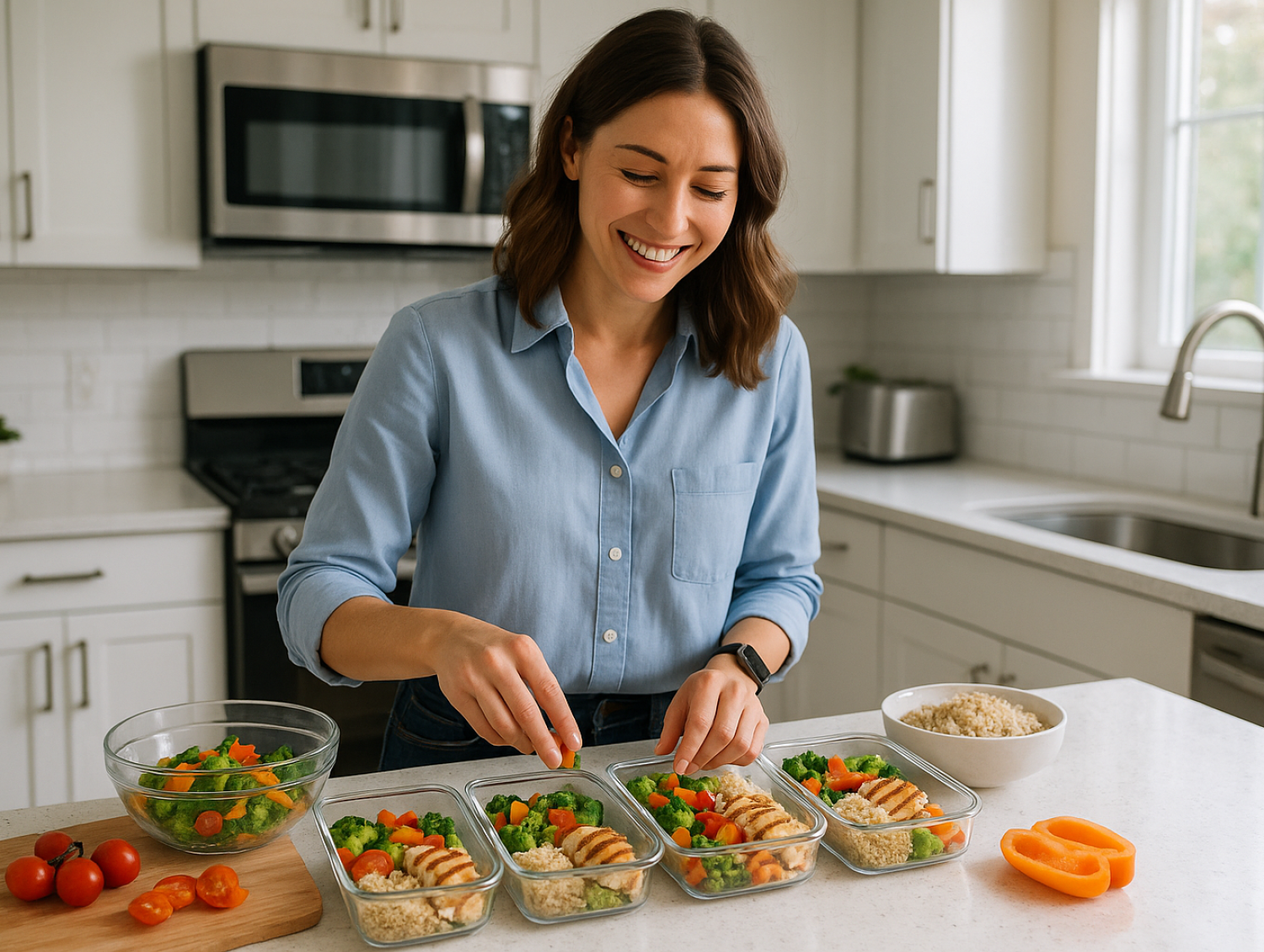
- Grilled chicken, roasted veggies, and quinoa bowls
- Turkey or tofu stir-fry with brown rice
- Sheet pan salmon with sweet potatoes and green beans
- Whole grain pasta with lean meat sauce and sautéed greens
Batch these recipes in one go, while your oven works on the sheet pan meal, your stove handles the grains, and your blender finishes breakfast smoothies.
Step 3: The 1-Hour Meal Prep Blueprint
Here’s how to maximize your hour:
| Time Block | Task |
|---|---|
| 0–10 mins | Wash and chop veggies |
| 10–30 mins | Cook grains (quinoa, rice, pasta) and proteins |
| 30–45 mins | Roast or bake meals (sheet pans, muffins) |
| 45–55 mins | Portion meals into containers |
| 55–60 mins | Clean up and label containers |
Efficiency tip: Play music or a podcast, meal prep doesn’t have to feel like work.
Step 4: Store Smart and Stay Fresh
- Use BPA-free airtight containers for storing prepped meals.
- Keep protein and sauces separate until serving to avoid sogginess.
- Label containers with meal names and prep dates.
- Store 3 days’ worth in the fridge, and freeze the rest if needed.
This not only extends shelf life but keeps your food tasting fresh throughout the week.
Step 5: Mindful Eating During Your Workweek
Meal prep isn’t only about convenience, it’s about building healthier eating habits.
When eating your prepped meals:
- Step away from your screen (even for 10 minutes).
- Eat slowly and enjoy your food.
- Hydrate, aim for 2–3 liters of water daily.
- Keep healthy snacks handy (nuts, fruit, yogurt).
These small practices amplify the benefits of your preparation.
Bonus: Office-Friendly Snack Ideas
Busy day ahead? Try these nutritionist-approved snacks:
- Trail mix with almonds, walnuts, and dark chocolate chips
- Greek yogurt with chia seeds
- Hummus with carrot or cucumber sticks
- Whole-grain crackers with tuna or boiled eggs
Each option fuels your brain and keeps cravings at bay.
Conclusion: Small Effort, Big Results
You don’t need to be a chef or spend your weekends in the kitchen. One hour of strategic meal prep can transform your health, productivity, and peace of mind.
Remember, the goal isn’t perfection; it’s progress. Each week, refine your process, discover what works best for your schedule, and watch how your energy levels and focus skyrocket.
So the next time you find yourself reaching for takeout, ask:
“Could I have prepped this meal in under an hour on Sunday?”
The answer will likely be yes, and your future self will thank you.